Saturday, June 3, 2023

An Array of Abacuses

 My dad collected manually-operated adding machines. His drafting work often called upon him to add up numbers, so he had at hand a hand-cranked adding machine with dozens of buttons, also one of those plastic turn wheel adding machines that you had to use a stylus to turn the wheels, and he also had three (or more)  abacuses (the plural of abacus), those featuring sliding beads that a skilled manipulator could use to add up totals very quickly. 

In fact, that is what my dad used when adding up orders and sales tax for his hot tamale sales business. Here is a picture of three of his abacuses. 


Click on the image to make it larger.

He also had a selection of slide rules of various sizes, even a circular one. Those came in handy for multiplication and other more complex mathematical calculations. His day job was a piping run draftsman for a chemical plant in Ama, La., so he did a lot of measuring and computations comparing plans for piping runs to actual as-built piping runs between processing units in the plant. 

All these were prior to the coming of electronic calculators, both the desk models and handheld kinds. I remember the first handheld calculators, they cost several hundred dollars. The "scientific calculators" cost even more. Now they give them away as souvenirs at trade conventions. 


Slide rules


Thursday, June 1, 2023

Cuckoo Clock Conundrum

 In 1971 I acquired a cuckoo clock. It actually worked and kept pretty good time, so I put in on the wall and every hour it would announce the time with a little bird coming out of the swinging door and going cuckoo. 

It was powered by a falling weight on a chain, so every so often you had to run the weight (that looked like a long pine cone) up to the top so gravity could pull it downward again and keep the gears turning.

After a while I just forgot about winding it, but left it on the wall anyway. Here is a picture of it:


The clock and the cuckoo

I didn't realize it at the time, but not winding a cuckoo clock on a continuing basis tends to make it malfunction in unusual ways. 

Not long afterwards, I was listening to a New Orleans radio station, one that used the sound of a cuckoo clock as a sound effect to introduce various segments or to punch up a particular joke being told. The radio station announced that it needed to record a new cuckoo clock sound effect, and it was now taking "auditions" from area cuckoo clock owners. 

I called the station, got on the air, and told them I had a slightly-malfunctioning cuckoo clock I would like to audition. The disc jockey asked me what was wrong with it, and I told him that when it strikes the hour, it doesn't sound the first part of the cuckoo, the "kook," but it did sound the second sound, the "oou." In other words, instead of going "cuckoo, cuckoo, cuckoo" at the top of the hour, it just went "oou, oou  oou."

The disc jockey declined to make a recording of my clock. He said he thought he knew where the kook was. 

I soon took the clock down off the wall, since it was getting embarrassing to have friends over and all of a sudden the cuckoo clock going "oou, oou, oou."


Monday, April 24, 2023

Moving A Tool Shed

Recently, when I got the opportunity to move all my work tools from the old tool shed to a brand new tool shed, I vastly underestimated the work involved in doing so.

I have three groups of tools: the stuff I inherited from my dad, the sign painter; the stuff he inherited from his dad, the Greyhound bus mechanic; and the stuff I have purchased over the years, either new or at garage sales.

My grandfather's tools are big wrenches, sockets, and really heavy-duty things that I have no idea what they are, but obviously they came in handy when fixing passenger buses. I remember visiting my grandfather in his tool shed one time, and he had dozens of jars filled with large marble-sized ball bearings. That was interesting to look at. 

My father's tools were the usual assortment of hammers, pliers, wrenches, and yardsticks, plus a few extension ladders and scaffolding. After he died, I gave away the scaffolding, but kept a couple of the ladders. He had a fine array of measuring tapes, paint brushes and drafting instruments (those being useful in sketching out and designing signage.)

The tools I have personally acquired are also the usual assortment of hammers, pliers, and wrenches as well, along with electrical tools, plumbing tools, jacks and fencing tools. I owned two rental houses at one time so I needed a selection of maintenance and repair items.

So when came the opportunity to move the entire collection of tools from the old tool shed, I must have been out of my mind to think I had to move everything. Many of those tools could be retired, especially the rusty hammers, rusty wood plane, and rusty pliers. Basically anything with rust on it could be given away. 

But even that leaves me with too many tools. 

I'm thinking about the saws, the crow bars, the chisels, the wood punches. How many of those does a person really need?  One wood punch is actually enough. A couple of different sizes of chisels might be handy, but more than one crow bar is not necessary especially when the big crow bar is actually too big to use since it weighs a ton. 

And speaking of tons, there's two hydraulic jacks, one of which still works. 

Then there are the consumables: the screws, bolts, washers, nuts, and lock nuts. Even a dozen or so cable clamps. U-bolts of every size and description, stove bolts, hose clamps. There are also C-clamps and pipe clamps. There are post hole diggers, a pole saw, circular saw, jig saw, hack saw(s), power drills, hand drills, squares, levels...

Oh, and the rope, and the chain, and driveway reflectors. Velcro strips (why are they in the tool shed?) Glass jars full of this, that and the other. Plastic bins with plastic  drawers, tool boxes (both metal and plastic), carts and furniture moving wheeled platforms. 

Why do I have four screw-in-the-ground dog leash anchors?

Why do I have any of this stuff? I'm not a handyman, and I don't run a contracting business. One day soon I will gather up most of it and go donate it to Habitat for Humanity. That's a really good idea. Now all I need is a wheel barrow to haul it in. I had a wheelbarrow at one time, but I loaned it to someone and have forgotten who. 

There are many items that I won't be giving away or donating. Those are the plastic parts bins that are so old and brittle they are cracking open when I pick them up (and spilling fasteners all over the floor as a result). There are the tools with the black plastic coating that was originally an "easy grip" coating but is now a sticky horrible mess to handle. Into the garbage with that mess.

And speaking of black plastic easy-grip coating, the plastic sheath around my battery-powered hand drill has completely shredded. I mean, it has come apart into dozens of stringy pieces. I can still use the drill, but my hand is surrounded by dangling shreds of easy-grip plastic. Weird. 

Well, enough about my tool shed. Fortunately, sometime in the past, I bought a giant mega-sized super pack of pegboard hooks so I'm good to go in that department. Hundreds of pegboard hooks of every size and description. They should go well with my oversized collection of cup hooks, wall hooks, hinges, mending plates, angle brackets, and shelf brackets.

Why do I keep all this stuff? I'll tell you why. I went to the building materials store the other day (to buy pegboard) and was amazed to find out what they were charging for hammers, screwdrivers and a small box of screws. Tools and hardware have quadrupled in price. So that's as good a reason as any to keep the tool shed fully stocked and ready to bequeath to the grandchildren for when they have their own tool sheds. Let them figure out what to do with all the giant bus repair tools. 

Monday, April 17, 2023

Pictorial Map Book

 I just beefed up and republished my book of cartoon bird's eye view maps. These are the maps that I have been drawing over the past 40 years, starting in 1983 with downtown Covington. 


I had published a smaller version of the book a few years ago. This one is 8 1/2 by 11 inches, so the maps have been reduced to fit. The original maps were 11 x17" and in many cases two feet by three feet, so the reduced-to-fit versions in the book will not contain the level of detail of the original maps. But the overall map is interesting to look at, and many of those maps have been posted to this website and over at Tammany Family blog at full size so you can zoom in to see the detail. Links to those at the bottom of this post. 

Since the mid-1980's I've been drawing maps in Louisiana, Mississippi, Georgia, Alabama, and even South Carolina. They are fun to look at, and I would think a valuable historical reference. Already I get emails from people saying that they have a copy of one of my maps from 30 years ago, and it helps jog their memories of what was where, especially the businesses that are no longer with us. I made many great friends travelling across the South visiting the cities and towns, and working with the local chambers of commerce and newspapers to use the maps for promotional purposes. 

To order a copy of the book, click on this link.

Links to cartoon maps on the internet:

Folsom Pictorial Maps

Madisonville Map 2017  

Pictorial Maps Presented   

Shop Local USA

Cartoon Map Presentation


Saturday, April 8, 2023

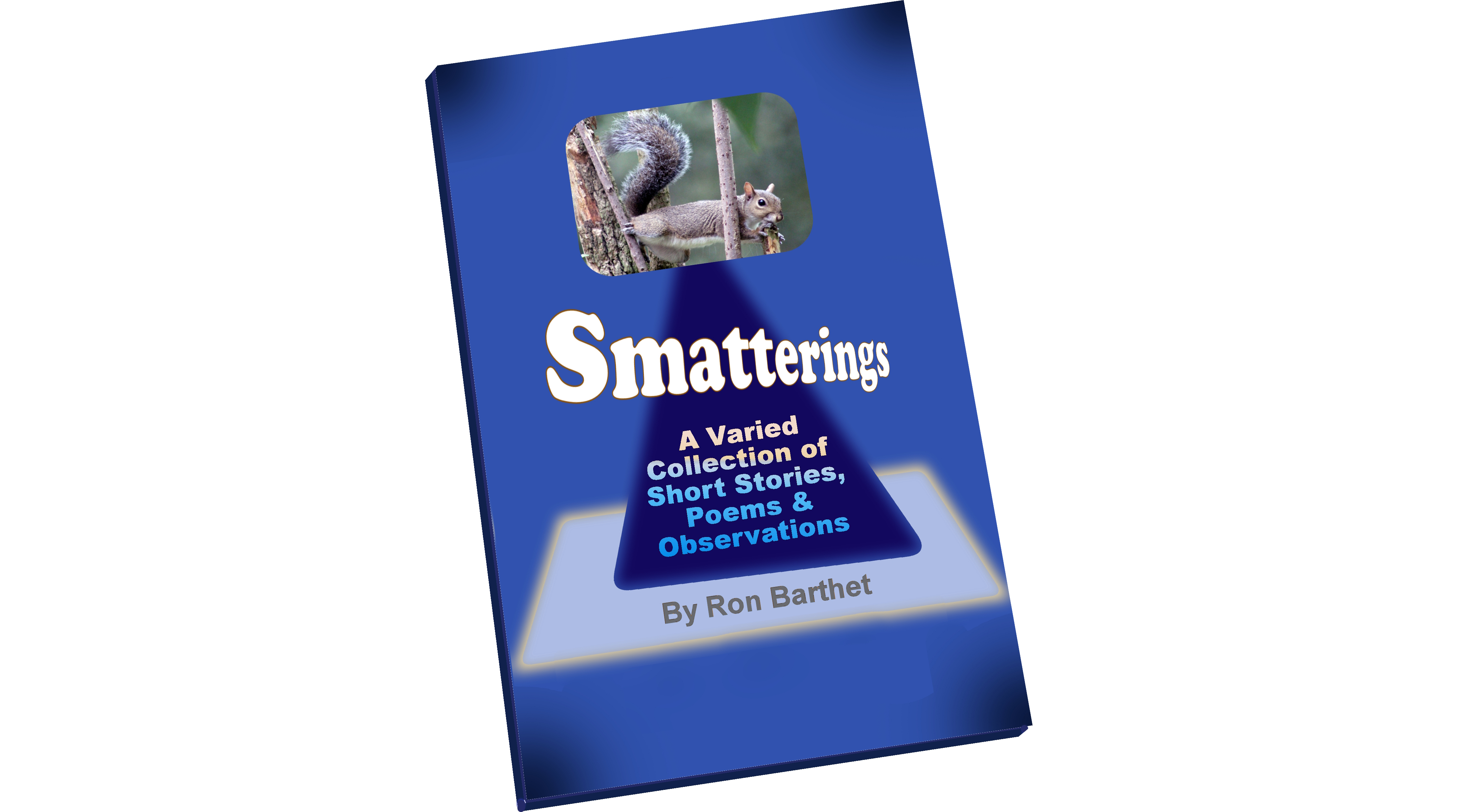
Smatterings

 Some friends have asked me to put my short stories and poems into a book. Here it is. This collection features a number of my gallery blog articles, selections from my "sixty second science fiction" book, and several humorous off-the-wall stories.

As a bonus I have included the three "Tibert the Cajun" adventures - sort of as a tribute to Justin Wilson. The poems are generally upbeat, except the one about New Year's Eve. So if you like fiction, lines that rhyme, or an offbeat look at time travel fiction, this book has a smattering of each. Now available on Amazon.


Thursday, October 27, 2022

Houston Hotel Lobby

 One Christmas vacation I decided to go to Houston for the holidays. After visiting with some relatives, I headed downtown with my camera and just wandered around, taking pictures of the urban landscape, the fountains, the sidewalks surrounded by tall buildings and the underground shopping center. 

The photo below shows the lobby of the downtown Hyatt Regency Hotel from one of the interior atrium balconies. The bank of elevators are at the top of the frame. 


This view became important later on because when I wrote my science fiction novel "The Gafferty Perspective" a few years after my visit, the final moments of the novel took place in the atrium lobby of the hotel. 

The last chapter of the novel was revised during a subsequent visit to the Houston area, where I used a typewriter in the offices of the The Woodlands community newspaper to put the finishing touches on it. 


Sunday, October 2, 2022

Microscope Camera

 I found a microscope camera that hooks up to a computer. Here are some photos taken with the gadget. 


Cloth


Computer monitor


Cellphone screen


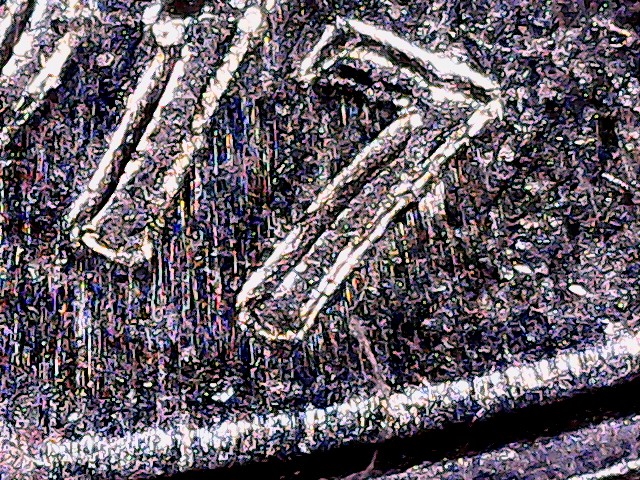
Edge of a dime minted in 2017


A metal ruler with a sixteenth of an inch between the marks


Bristles from a toothbrush


Contacts on an SD memory card


Saturday, August 20, 2022

Mount Cheaha

 Every so often I drive to north Alabama to take in the mountain roads and long-range high elevation vistas. While there are a number of good views and curvy roads up around Chattanooga, the best combination of those are found over on Mount Cheaha near Anniston, which features "the highest point in the state."

I find myself going back to Mount Cheaha State Park every few years, just to sit on the overlook balcony and watch the sunset. I lived near there when I was an editor for the newspaper in Pell City, and even then I would drive over to Mount Cheaha every other week to take in the scenery. It helped that the state built a lodge, a picnic grounds, a campground, a motel, and a great little restaurant with a great big window you can look out of while eating. 

Here are some photos:


The roads are steep with a lot of sharp turns, but once you get there it is worth the effort. There is even a four story stone tower at the "highest point" that you can climb up to the very top and be the highest person in the state, out of breath for sure, but still the highest person if you don't count people in aircraft. 


I went there a few weeks ago, and the place was about deserted. There were only about four people staying in the 120 room motel, the restaurant was closed due to a shortage of people to staff it, and the buildings looked a little shabbier than when I last saw them. Perhaps that was due to smaller maintenance budgets, perhaps due to the buildings getting older, or perhaps my memory of them being too forgiving since the last time I saw them. 

CovID 19 threw the state park for a loop, no doubt. Probably  not many people drive their motor homes and travel trailers up the long winding roads any longer.  I hope it will bounce back and revive. Until then, I will hold onto my memory of eating a full Thanksgiving dinner at the mountain top restaurant, looking at the fantastic view of the mountains receding in the distance, but for the same price of a meal at Shoney's down at the interstate exit.


Saturday, July 23, 2022

What To Do With Leftover Grits

 If you live in the South, you are bound to have come across the question of what to do with leftover grits. There is no such thing as cooking too much (many?) grits, since a full pot of grits cooking on the stove provides just what you want to eat that morning (night?) plus the extra benefit of having leftover grits.

Since a full pot of grits takes just as much effort to wash and clean afterwards as a half pot of grits, you may as well cook enough grits for you and the family to eat right then and there, then whatever is leftover can be put in the refrigerator. That's right, northern friends, cold grits are almost just as good as warm grits. 

Cleaning a pot out in which you have cooked grits is a real challenge. Let's just say the automatic dishwasher is next to useless in this case. Pots with cooked on grits on their insides just laugh at automatic dishwashers.

Of course, fresh warm grits taken right out of the pot are somewhat fluid (depending on how long you cooked them), and when you scoop a pile of grits onto your plate and put a pat of butter on top of it, the butter begins melting rapidly, then slides down the side of the pile of grits as it finds the path of least resistance. Soon, what's left of the pat of butter sits at the side of the pile, thinking it has escaped.

But, no, that's when you take your fork and lift the butter up and smash it back into the steaming pile of grits, giving it a slight stir. By the end of this procedure, you wind up with enough butter mixed in with the grits to make them taste more buttery than gritty. Some like it more one way than the other, but to each his own. 

But the grits that are leftover in the pot, the grits that didn't get scooped and put on the breakfast plate, these are the grits that begin an adventurous journey into the refrigerator. They are scooped up and dumped into a glass (or other suitable container), then put in the fridge to cool. Sometime later, whenever the desire for grits arises again, just take the glass out of the fridge and slide the now solidified mass of grits out of the glass onto a plate.

The path now diverges. Some people will take a fork and start prying off chucks to eat right then. Some people will attempt to pick up the whole solidified mass and try to eat it like some kind of grit popsicle. 

But my wife tells me her family would take the cylinder of cooled down grits, cut it into rounded slices, then throw those into a pan greased with bacon grease and fry those puppies. I personally have never done that, being of the group that likes to eat their leftover grits straight out of the refrigerator. Probably with a fork. At that point, however, putting butter on the cold grits does absolutely nothing. It just falls off to the side. 

And such is the fate of leftover grits. It's just another episode in the "Greatness of Grits," soon to be a major motion picture. Some friends tell me that the word Grits is also an acronym that stands for "Girls Raised In The South." I suppose that's possible, but not what I was talking about above.